
Casio 95QS-42
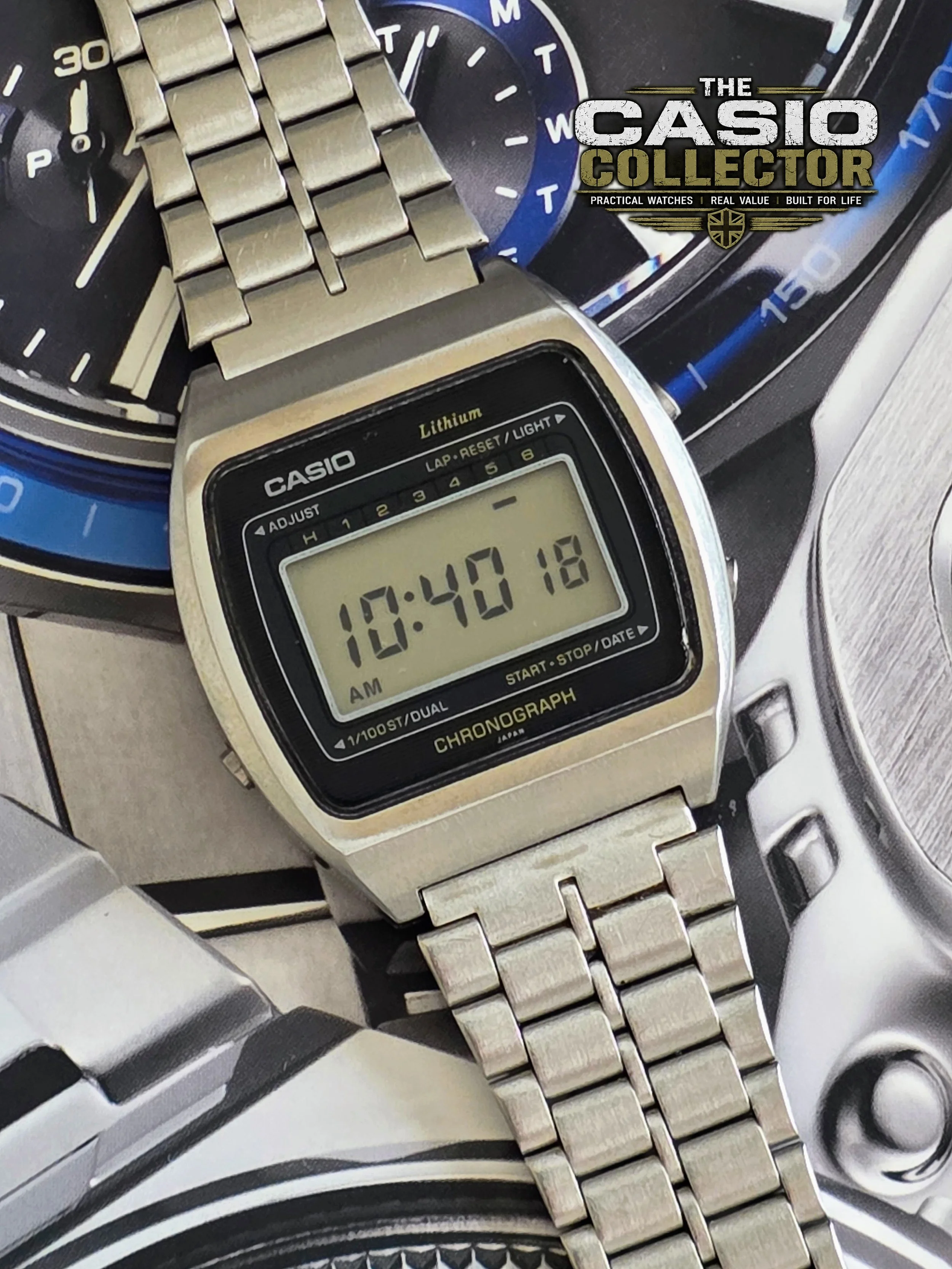
Restoring My Oldest Casio From 1977
There are old watches, and then there are watches that make you stop and realise just how much time has actually passed.
My
Casio 95QS-42 dates from 1977.
That makes it the oldest Casio currently in my collection and, at around 49 years old, at the time of writing this, so it's now approaching half a century.
But its age isn't the only reason this watch is special to me.
This particular 95QS-42 had already lived a proper life long before it reached me.
And I think that's exactly how it should be.
A Watch That Had Been Worn
The previous owner told me that the watch had belonged to his dad.
His dad had passed away and, at some point afterwards, he decided to see whether he could get the old Casio working again.
He fitted a new battery, but only part of the LCD display appeared.
At that point, we actually discussed the watch and I tried talking him through some troubleshooting that might get the display working again.
There was only one problem.
Tiny screws.
He simply didn't have the patience for fiddling around inside an old digital watch – and I can't entirely blame him.
Eventually, he decided to sell it to me instead.
When it arrived, one thing was immediately obvious:
His dad had worn this watch.
A lot.
And actually, I liked that.
Watches Are Supposed to Be Worn
It's easy as a collector to become obsessed with finding perfect examples.
No scratches.
No marks.
Original stickers still attached.
Never worn.
But that's not what watches were made for.
They're supposed to be put on your wrist and used.
This 95QS-42 had certainly been used.
It needed an incredibly thorough clean after decades of wear, and the case was covered in scratches. Fortunately, they weren't particularly deep, but they were deep enough that simply polishing the case wasn't going to remove them.
So I had a decision to make.
Leave the case as it was, or carefully restore it.
I chose the latter.
Slowly Bringing the Case Back
Restoring an old watch case is one of those jobs where patience matters far more than speed.
The scratches needed sanding out before the finish could be brought back, but every time you sand a case you're physically removing material.
Go too far and you haven't restored the original case anymore.
You've changed its shape.
So I worked on it gradually.
The vast majority of the scratches eventually disappeared and the case came back far better than I initially expected.
There is still one mark.
If the light catches the watch at exactly the right angle, I can see it.
Could I keep sanding until that final scratch completely disappears?
Probably.
But I'm not going to.
To remove it I'd have to take more material from the case, and at that point I risk softening the edges too much and losing some of the original shape.
For me, that's where restoration should stop.
I'd rather have one tiny reminder of the watch's previous life than destroy part of the watch trying to make it perfect.
The Display Problem
Then there was the reason the watch had been put up for sale in the first place.
The previous owner had already fitted a battery and discovered that only part of the display worked.
Fortunately, I had a pretty good idea what was causing it.
The LCD itself wasn't necessarily faulty.
The problem was much more likely to be the zebra strips that make the electrical connection between the circuit board and LCD.
After nearly five decades, dirt, contamination or simply poor contact can prevent individual LCD segments from displaying correctly.
The solution was to strip things down, give everything a thorough clean and carefully clean and reseat those zebra strips.
Back together it went.
And there it was.
A complete display again.
No replacement LCD.
No donor module.
Just careful cleaning and making sure the original components were making proper contact again.
That's always satisfying.
But when the watch you're bringing back is from 1977, it feels particularly good.
Module 95
Inside the 95QS-42 is Casio module 95, one of the company's early digital modules.
Reliable surviving information about these watches isn't anything like as plentiful as it is for later Casios, but vintage digital-watch archives consistently date the 95QS-42 and other module 95 models to 1977.
And this wasn't simply a watch that displayed hours and minutes.
Module 95 provided timekeeping, calendar information, dual time and chronograph functionality – a surprisingly useful collection of features for a digital wristwatch from the late 1970s.
Period advertising from 1980 was still listing the 95QS-42B and specifically described it as having a chronograph, 12/24-hour display and dual time.
Today those functions sound completely ordinary.
In the context of a watch designed in the 1970s, they're part of what makes it so interesting.
From a Very Different Casio
When people hear the name Casio today, they might immediately picture an F-91W, a G-Shock or perhaps one of the company's modern analogue watches.
The 95QS-42 comes from a very different period in Casio's history.
Digital watches themselves were still relatively new technology.
There wasn't yet a decades-old Casio design language to follow. Manufacturers were still experimenting with what a digital wristwatch should look like and what functions could reasonably be squeezed inside one.
That's something I love about watches from this period.
The 95QS-42 doesn't look retro because somebody designed a modern watch to imitate the 1970s.
It actually comes from the 1970s.
There's a huge difference.
Nearly Half a Century Later
Perhaps the most remarkable thing is simply that it still works.
Think about everything that's happened since 1977.
Technology has moved on almost beyond recognition.
Yet this little LCD Casio can still sit on my wrist and perform the job it was built to do nearly half a century ago.
And mine hasn't achieved that by spending its entire life protected inside a box.
It was worn.
The scratches proved that.
The dirt certainly proved that.
Someone owned this watch before me and clearly got years of use out of it.
Eventually it ended up sitting unused, its display apparently faulty, until it found its way to me.
Now it's working again.
I like that far more than if I'd simply bought a pristine example that had never seen a wrist.
Restored, Not Erased
There's an important distinction for me between restoring a watch and trying to erase its history.
I wanted the 95QS-42 to look good again.
I wanted the case to regain its shape and finish.
I wanted the display working properly.
And obviously I wanted nearly five decades of accumulated grime removed.
What I didn't want was to turn it into something it isn't.
It's not a brand-new watch.
It's a 1977 Casio that belonged to somebody's dad and was worn enough to accumulate years of scratches and marks.
I've removed almost all of those scratches, but that final faint mark remains.
And I'm happy with that.
The watch looks fantastic now, but it hasn't cost me the original shape of the case to achieve it.
That's a compromise I'll take every time.
The Oldest Casio in My Collection
I've got a lot of Casios.
Some are more technologically advanced.
Some are tougher.
Some have sensors, solar charging, radio-controlled timekeeping or features that the engineers responsible for module 95 probably couldn't have imagined fitting inside a wristwatch.
But none of them currently takes me as far back through Casio's history as this one.
1977.
That's what makes the 95QS-42 special within my collection.
And assuming I still own it next year, I'll have something I think is rather cool:
A working 50-year-old Casio.
Not bad for an old watch that arrived with half its display missing.
The Casio Collector Verdict
The Casio 95QS-42 is one of my favourite restoration stories.
Not because the repair itself was particularly dramatic.
There was no destroyed module to rebuild and no impossible-to-find LCD required.
The electronics simply needed somebody prepared to take the time to investigate them properly.
Cleaning and reseating the zebra strips brought the full display back to life.
The case took considerably more work.
Careful sanding removed decades of scratches before I refinished it, stopping deliberately before removing enough material to affect the original shape.
One faint scratch remains.
It's staying.
This watch belonged to somebody before me. It was worn, enjoyed and accumulated those marks honestly. My job wasn't to erase that history – it was to make the watch something that could be enjoyed again.
And now it can be.
A digital Casio from 1977, still functioning nearly half a century later, is something I find genuinely impressive.
It's also currently the oldest Casio in my collection.
There may be older ones in the future – knowing me, that's probably dangerous to rule out.
But this one will always have a story.
Someone else's dad wore it.
His son tried to revive it.
Tiny screws eventually defeated him.
And somehow it ended up on my workbench.
Forty-nine years after it was made, it's back doing exactly what a watch is supposed to do.
Being worn.
Specifications
Model: Casio 95QS-42
Release: 1977
Module: 95
Movement: Quartz digital
Display: LCD
Timekeeping: Hours, minutes and seconds
Time format: 12/24 hour
Calendar: Calendar display
Dual time: Yes
Chronograph: Yes
Caseback: Stainless steel
Water resistance: No water-resistance claim relied upon for this vintage example
Current condition: Restored and fully operational
Display restoration: Original LCD retained; zebra strips cleaned and reseated
Case restoration: Carefully sanded and refinished while retaining the original case shape
A Video Review will be added once created and edited