
Casio SGW-300H-1AV
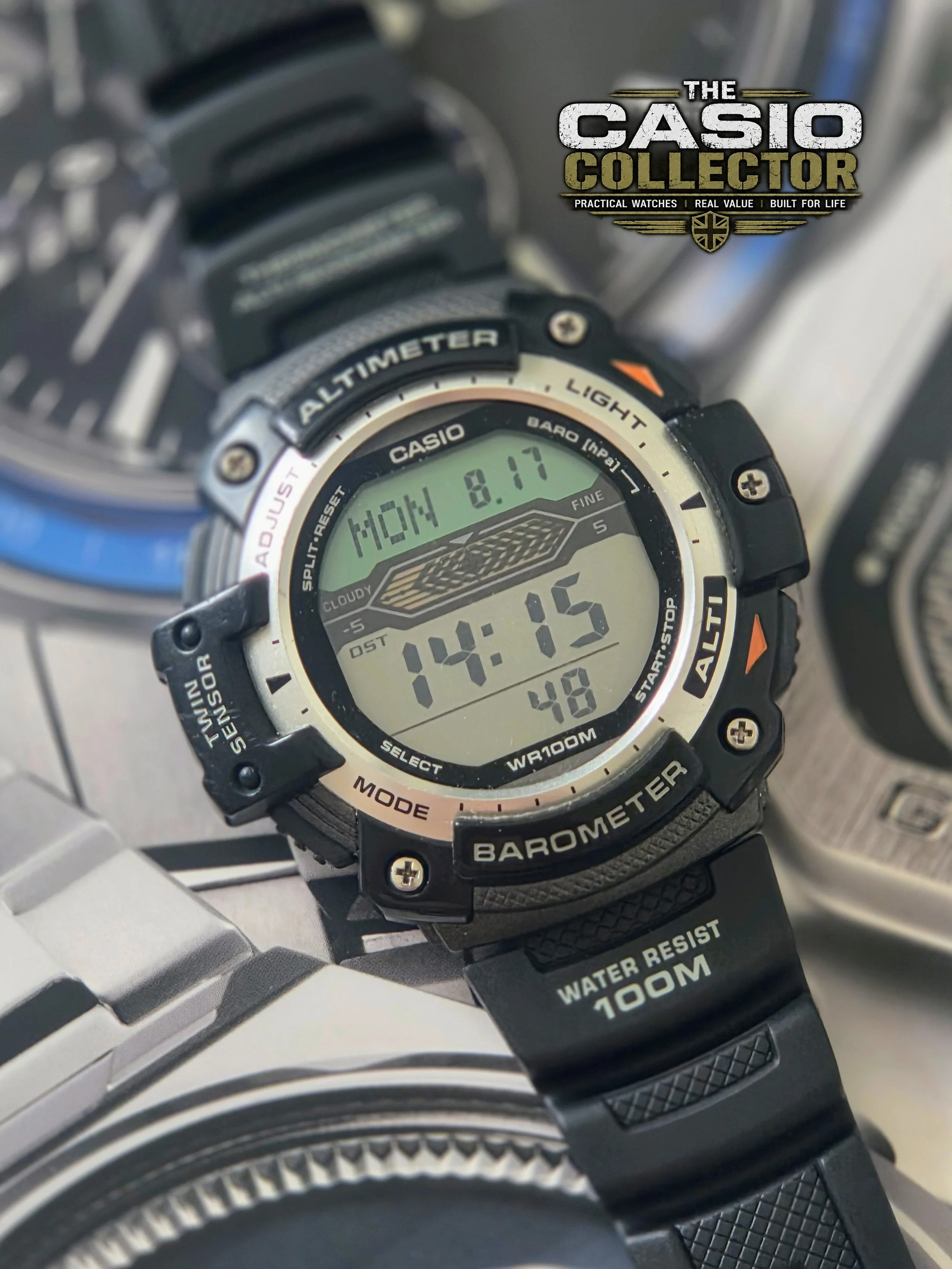
Pro Trek-Style Features Without the Pro Trek Price
The Casio SGW-300H-1AV is another of Casio’s excellent outdoor-focused watches, sitting somewhere between a traditional digital Casio and the more expensive Pro Trek range.
It offers an altimeter, barometer and thermometer alongside the usual collection of Casio functions, yet it remains relatively lightweight, straightforward to use and affordable.
For me, that is where much of the SGW-300’s appeal lies. It gives you some genuinely useful outdoor features without becoming overly complicated or feeling like you are wearing a large piece of specialist equipment on your wrist.
It’s More Than a Basic Outdoor Watch
The SGW-300H uses Casio’s Twin Sensor technology to measure altitude, atmospheric pressure and temperature.
The altimeter has a measuring range of -700 to 10,000 metres, making it useful for walking, hiking and keeping track of changes in elevation.
There is also an altitude-difference function, which allows you to compare your current altitude with a reference point. That can be more useful in practice than simply knowing your height above sea level, particularly when following a route involving climbs and descents.
The barometer measures atmospheric pressure and includes a pressure-difference indicator. This can help you monitor changing conditions and spot pressure trends that may indicate a change in the weather.
It is important to remember that this is still a wristwatch rather than a professional meteorological instrument. Even so, these features give the SGW-300 far more genuine outdoor ability than the appearance of an ordinary digital watch might suggest.
Understanding the Altimeter
As with most watches that calculate altitude using atmospheric pressure, the SGW-300’s altimeter has limitations.
Changes in weather conditions can alter the atmospheric pressure, causing the displayed altitude to change even when you have not moved. For the most useful results, it is best to calibrate the watch against a known altitude before beginning a walk.
I do not see that as a particular fault with the SGW-300. It is simply how barometric altimeters work.
Used correctly, it can provide a useful indication of your progress and changes in elevation. It should not, however, be treated as a substitute for proper navigation equipment or an exact professional measurement.
The Barometer and Thermometer
The barometer is arguably one of the more interesting features because it allows you to monitor changes in atmospheric pressure directly from your wrist.
A single pressure reading does not tell you everything, but watching whether the pressure is rising or falling can help give an indication of changing weather conditions.
The thermometer measures from -10°C to 60°C, although body heat will affect the reading while the watch is being worn.
For a more accurate ambient temperature, the watch needs to be removed from the wrist and given time to adjust to its surroundings.
That makes the thermometer more of an occasional reference tool than something I would constantly monitor. Nevertheless, it is a useful addition and completes the SGW-300’s outdoor-focused package.
Lightweight Despite Its Size
The SGW-300H has a fairly substantial appearance, measuring approximately 49.2 × 50 × 14.1mm.
Those dimensions make it sound like a particularly large watch, but it weighs only 47 grams.
That low weight makes a significant difference on the wrist. You still get the presence and rugged appearance of a proper outdoor watch, but without the heaviness associated with a similarly sized stainless-steel model.
It also feels less bulky than many G-Shocks, despite offering more specialist outdoor functionality than a typical basic G-Shock.
The resin construction and flexible strap help make it comfortable enough for prolonged wear, which is exactly what you want from a watch intended for walking or hiking.
A Rugged and Purposeful Design
What I particularly like about the SGW-300H-1AV is its design.
The large digital display is easy to read, while the aluminium bezel and contrasting display sections give it that unmistakable Casio outdoor-watch appearance.
It looks rugged and purposeful without becoming excessively bulky or overdesigned.
The separate display areas also help organise the amount of information available. There is quite a lot happening on the screen, but it does not feel as cluttered as it could have done.
It is a watch that looks like it was designed around its functions rather than having outdoor features added purely as a marketing exercise.
Plenty of Everyday Casio Functionality
Alongside the sensors, the SGW-300 includes plenty of traditional Casio functionality.
World time covers 48 cities across 31 time zones, while the stopwatch measures to 1/100 of a second and can run for up to 24 hours.
There is also a 24-hour countdown timer, five daily alarms, an hourly time signal, a full automatic calendar and 12 or 24-hour timekeeping.
The LED illumination includes afterglow, making the display easy to check in darkness.
Water resistance is rated at 100 metres, which is perfectly sensible for a watch of this type. It also has low-temperature resistance down to -10°C, reinforcing its suitability for outdoor use.
Three-Year Battery Life
Power comes from a CR2016 battery, with Casio quoting an approximate battery life of three years under its specified operating conditions.
That is not particularly impressive when compared with simpler Casios offering five or ten years of battery life.
However, the SGW-300 is regularly taking sensor readings and powering a much more complicated collection of functions, so some reduction in battery life is understandable.
Three years is still perfectly manageable, although it is one of the compromises that comes with having the additional sensor technology.
The Compromises
The main compromises are linked to the very features that make the SGW-300 interesting.
The altimeter needs to be calibrated if you want the most useful readings, and changes in atmospheric pressure can affect the displayed altitude.
The thermometer is influenced by body heat while the watch is being worn, while the three-year battery life is fairly ordinary by Casio standards.
It is also a substantial-looking watch. Although the low weight makes it comfortable, somebody wanting a small and discreet digital Casio may find the SGW-300 too large.
None of those points would put me off owning it, but they are worth understanding. This is a capable outdoor watch rather than an effortless ten-year-battery everyday digital.
The Casio Collector Verdict
The Casio SGW-300H-1AV is a very capable and slightly overlooked Casio.
It is lightweight, tough and packed with features that can be genuinely useful for walking, hiking and monitoring changing outdoor conditions.
The altimeter, barometer and thermometer give it a clear purpose, while the large display, 100-metre water resistance and traditional Casio functions make it practical enough for everyday use.
I also like that it offers much of the character and functionality associated with the Pro Trek range without the additional size, complexity or price.
The sensor readings need to be understood and used sensibly, and the battery life is not exceptional. However, those are reasonable compromises for the amount of functionality Casio has fitted into a 47-gram watch.
For anyone who enjoys the older SGW and OutGear models, this is definitely one worth having in the collection.
Lightweight, capable and packed with useful outdoor features – Pro Trek-style functionality in a simpler and more affordable Casio.
Specifications
Model: Casio SGW-300H-1AV
Module: 3202
Display: Digital
Case and Bezel: Resin with aluminium bezel
Band: Resin band
Glass: Mineral glass
Dimensions: 49.2 × 50 × 14.1mm
Weight: 47g
Water Resistance: 100 metres
Low-Temperature Resistance: -10°C
Sensors: Altimeter, barometer and thermometer
Altimeter Range: -700 to 10,000 metres
Altitude Functions: Current altitude and altitude difference
Barometer Range: 260 to 1,100 hPa
Barometer Functions: Atmospheric-pressure reading and pressure-difference indicator
Thermometer Range: -10°C to 60°C
World Time: 48 cities across 31 time zones
Stopwatch: 1/100 second, up to 24 hours
Countdown Timer: Up to 24 hours
Alarms: Five daily alarms
Hourly Time Signal: Yes
Lighting: LED illumination with afterglow
Calendar: Full auto-calendar to 2099
12/24-Hour Format: Yes
Battery: CR2016
Approximate Battery Life: Three years
Accuracy: ±30 seconds per month
A Video Review will be added once created and edited